
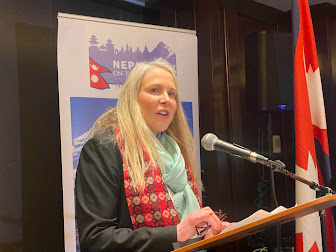
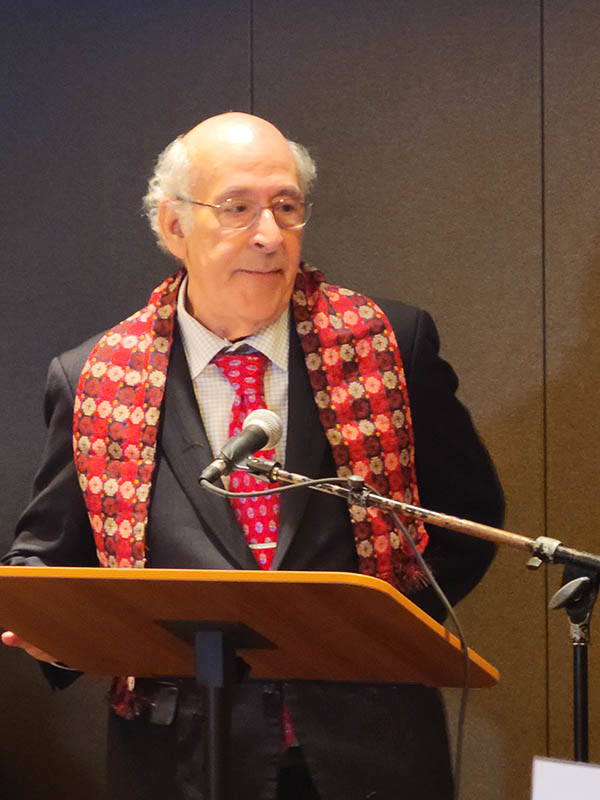
Speech given by Dr. Seth Sicroff at “Reimagine Yourself… in Nepal” event organized by Bishnu Gautam Consul General of Nepal in New York in Manhatton on March 30, 2023
There are many beautiful countries. There are many countries with fascinating cultures. There are many inexpensive destinations. But Nepal has another asset of unparalleled value. It has stories, engaging stories, stories that are told around the world and draw people to visit and participate in a way that doesn’t happen elsewhere.
The stories are the hook
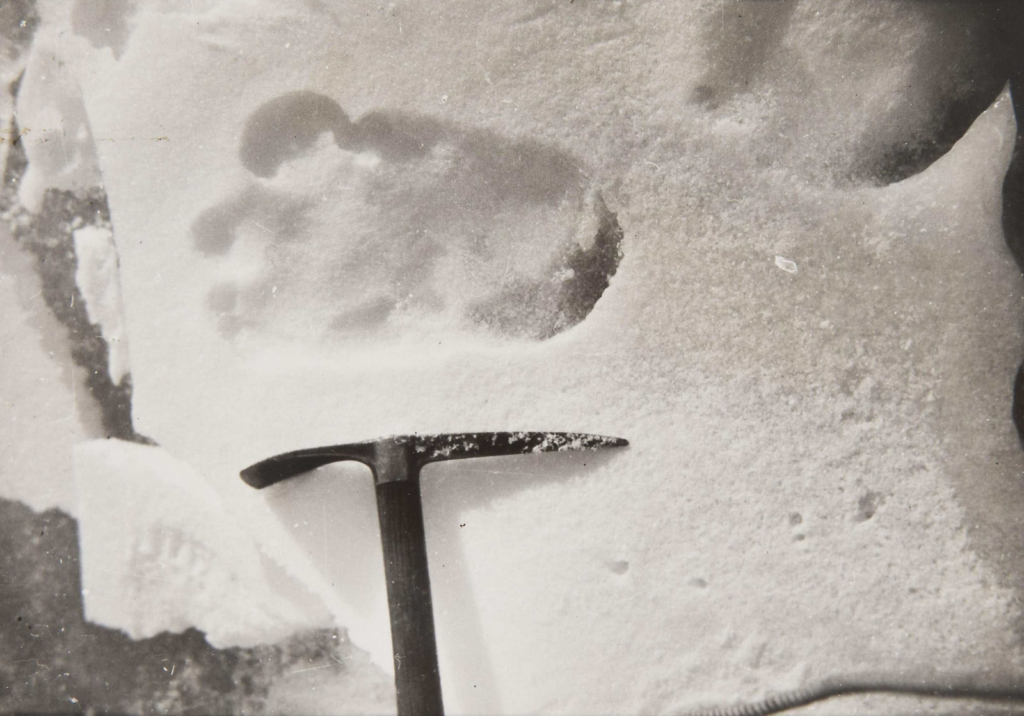
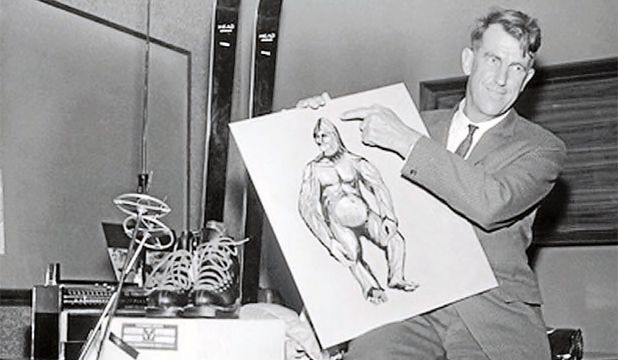
In 1951 Eric Shipton brought back the first convincing photographs of yeti footprints in the snow on Menlungtse Glacier, on the north face of Rolwaling Valley. Whether fact or fiction, the numerous reports of yeti, or abominable snowmen, enhanced the charisma of Nepal as a land of mystery and possibility, and drew quite a few… including myself.
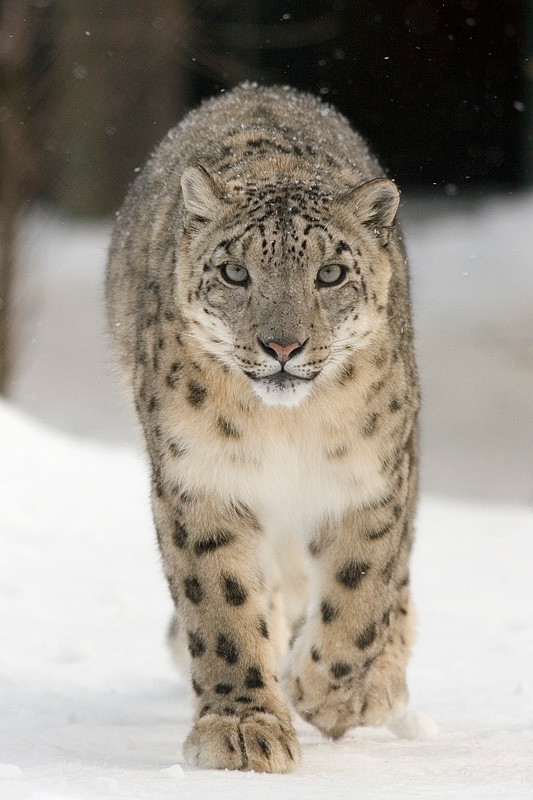
Another story with great drawing power was Peter Matthiessen’s book The Snow Leopard. In 1973, the great biologist George Schaller invited Matthiessen to trek with him from Pokhara west to Shey Gompa (Crystal Monastery) in Dolpo. Schaller’s purpose was to study the blue sheep, or bharal, but he hoped also to see the elusive snow leopard. Matthiessen’s account combines exquisite observations of the hallucinatory landscape and ecosystems with hard-nosed discoveries about himself. The book was a huge success and inspired thousands of young people to converge on Nepal for their own voyages of self-discovery.
As far as Nepal’s tourism industry is concerned, the greatest story was the success of Sir John Hunt’s 1953 British Everest Expedition.
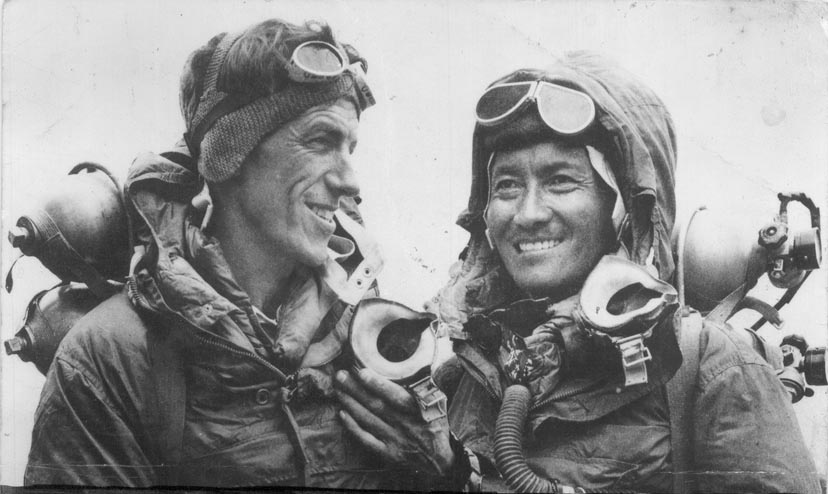
Before the news broke, Tenzing and Hillary were just members of a large expedition… not even on the first assault team. As summiters of the world’s highest peak, Ed Hillary and Tenzing Norgay had their lives transformed overnight. They became unimaginably famous celebrities. Previously a bee-keeper by profession and amateur climber when chores permitted, Sir Edmund Hillary became a professional adventurer, explorer, speaker, and goodwill ambassador for Sears Roebuck camping equipment and World Book Encyclopedia. More broadly, the conquest of Everest generated a worldwide wave of optimism and enthusiasm for physical adventure and transformed the formerly obscure nation of Nepal to the most glamorous destination in the world.
Reimagining adventure
Oddly, it was the epilogue of the monumental success on Everest that had the more enduring impact on Nepal. In 1960, Hillary fielded a scientific expedition on behalf of World Book. Half the time would be spent looking for the yeti, and half on a climb, in the course of which Hillary’s team would study the effects of altitude on human physiology. No yetis were caught, but Hillary learned that Khumjung Gompa (monastery) had a precious relic that believed was a yeti scalp. Hillary wanted to borrow it to get a scientific analysis. As part of the agreement, he was to return the next year and build a schoolhouse.
It turned out that this kind of project was something Hillary enjoyed greatly, and he kept returning year after year for new projects in service of Sherpa communities. Much like the mountain climbs, these development projects entailed planning, organization, fundraising, physical exertion, bureaucratic and meteorological obstacles, comradeship, risk of failure, and a great deal of satisfaction at a job well done. Hillary and his people created 27 schools, 2 hospitals, multiple bridges, water pipelines, three airstrips, and other infrastructure. They started ambitious reforestation projects, defeated a smallpox epidemic, and lobbied for the creation of Sagarmatha National Park, now a UNESCO World Heritage Site and an asset that powers Nepal’s tourism sector. Lukla Airport, which Hillary undertook in order to facilitate the delivery of construction material for the Kunde hospital, became a catalyst for economic opportunity. Solu-Khumbu, the Sherpa homeland, was jump-started out of the middle ages into the 20th century. Countless visitors have looked around, marveled at Hillary’s Promethean impact, and wondered, “What should I be doing with my life?” Many set up their non-profits in Nepal, or went home to work in their own communities. And the stories they told inspired more to come to Nepal.
Reimagining yourself
It makes sense that adventurers like Vanessa O’Brien would reimagine themselves in the context of their ultimate adventure… that’s part of the underlying construct of adventure. You set off to find the golden fleece or recover Helen from Troy or find the Holy Grail, you slip into the Other World, defeat a few dragons, rescue a maiden, come home and everyone wants you to rule the kingdom.
To be clear, however, it is not only adventurers or mountain climbers like Vanessa who reimagine themselves in Nepal. My own life trajectory bounced around a lot due to my repeated visits. I became a vegetarian within the first month, started teaching English in order to get my visa extended, and ended up working in tourism development rather than yeti affairs. In 1999 I set up an online pashmina export business for a Nepali friend who wanted to convert his trekking gear shop to a pashmina weaving workshop. And… I’m pretty sure my wife married me in order to have an excuse to come to Nepal.
But why Nepal?
So what is it that provokes self-reimagination in Nepal? First of all, whether you climb Everest or not, the entire country is other-worldly. Not just the physical country, but the cultural and spiritual, are beyond belief. You see and experience things you’ve only read about in adventure stories. So you’re primed for the big reveal. At the very least, you can lose a lot of weight just by trekking, and your Instagrams and propix are going to get mad likes.
Secondly, everything is in flux. There may be a lot of poor people, but the level of upward mobility is unusual. My friend Tsedam, who was selling peanut butter and toilet paper in his mother’s little grocery store in Namche Bazar when I met him, now owns the swank Zanskar Hotel. Namche itself, which had no flush toilets and only one lodge with electricity in 1975, has become a ritzy town with Internet, billiards, and German bakeries. There may be frustrations, but Nepal just feels like a place where things are possible.
Third, you meet people. The first time I was in Nepal, I ran into Ed Hillary wandering Freak Street in his burgundy slacks and red sport coat. I didn’t approach him, but he was certainly approachable. Flying to Lukla the first time, I was greeted in the airport lounge by Tenzing Norgay. I didn’t recognize him at first. We chatted a bit in Tibetan, he told me his mother was from Tibet and her home was in Thame village. If you stay at the late Namdu and Pasang Kami’s Khumbu Lodge lodge in Namche, you can see photos of Jimmy and Rosalyn Carter, and you can eat one of the same cinnamon buns they enjoyed. If there’s someone in Nepal you want to talk to, you probably can. Even if you’re nobody, you start feeling like somebody, and soon enough you begin thinking about some really great projects you could pull off. In Nepal, that’s totally normal.
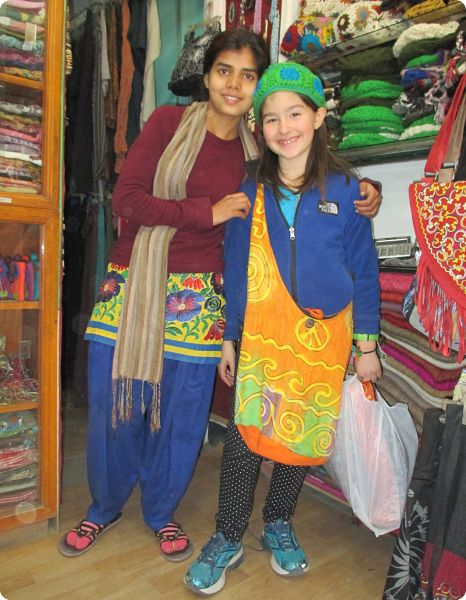
And the amazing thing is that this confidence and enthusiasm is totally viral. I dragged my daughter to Nepal when she was nine, and it completely changed her life. In three weeks she went from a timid kid from Ithaca NY who had never crossed the street we live on by herself, to a self-possessed young lady who carried all our money, handled bakshish for the beggars, and every night just before ten ran downstairs from our hotel room to the Tiny Little Cute Store at the other end of Freak Street to get my Everest beer and her Snicker bar before they closed up. This year she started college, and of course she told her boyfriend Noah Reifenheiser all about Nepal. So now he has started a project to introduce Ultimate Frisbee to Nepal.
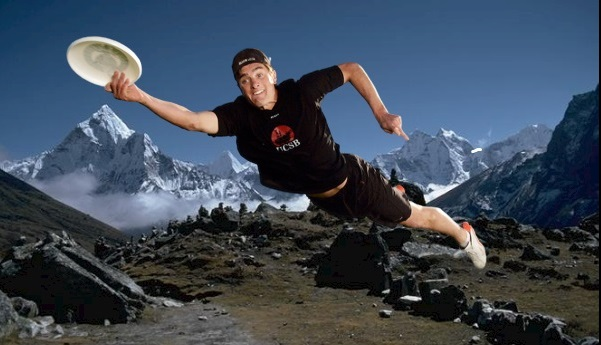
Noah’s project, Ultimate Destination: Nepal!, has the potential to promote physical fitness, gender equity, teamwork and happiness among Nepal’s youth. It would also generate economic opportunities if Ultimate Frisbee succeeds in Nepal, as it has been doing in other countries. Frisbee offers a way for host communities to interact with tourists, whether transient trekkers or visiting international teams. Person-to-person contact is fundamental to creating good will and that is what creates opportunities for personal and collective growth.
A national legacy
It is fitting that we observe today the 75th anniversary of Nepal-USA diplomatic relations. Sir Edmund praised the American strategy of creating goodwill through highly original programs like Sister Cities, USAID, and most notably the Peace Corps. It was in fact the Peace Corps that directly inspired Hillary’s own development assistance projects. “The basic fact is that people create goodwill – money cannot do it alone.” That is how Hillary explained American assistance as well as his own work. With goodwill, Hillary and his friends changed lives and moved mountains. This legacy of adventure, comradeship and re-imagination is Nepal’s gift to the world.
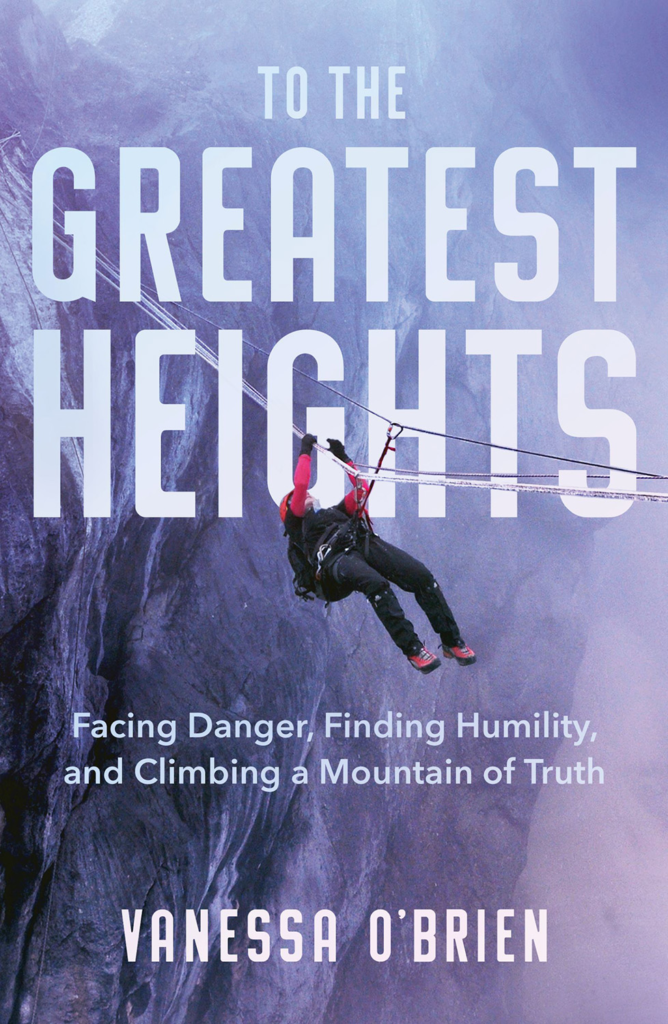
and became a mountain climber, explorer, and inspirational author and speaker
Leave a Reply