
A buyer’s guide to authenticity
If you’re investing in a pashmina shawl, whether a well-deserved Valentine’s Day gift for yourself or a present for your surgeon after a successful bypass, you want to be confident you’re getting genuine quality—not just a nice piece of cloth but an authentically scrumptious gem that will be treasured for years to come. This guide won’t guarantee you the best possible shopping outcome, but it will save you time and stress.
Like many luxury items, pashmina shawls are tricky to buy with confidence. The fakes are much more common than the real thing.
If you’re reading this article, you probably have one of two concerns:
- Is a particular item actually real pashmina?
- Is this pashmina item top quality or not?
These are related questions, and the difficulties in answering them overlap substantially, but they are distinct enough that it is more efficient to answer them separately. I will deal with the second question in a separate article.
In this article, I address first of all the framing questions:
- Why should one care whether a shawl is a real pashmina?
- What factors make it hard to know the answers to these questions?
- What are the conventional tests and why are they inconclusive ?
Why worry whether a shawl is “a real pashmina”?
Let’s start with the basic question: why would you even worry about whether the shawl you purchase (or are thinking of buying) is pashmina?
After all, if you are holding the shawl in your hands, most of the factors that could influence your evaluation of it are at your fingertips. You can assess the softness, the weight, the dimensions, the drape, the regularity of the weave, the color. You can assess the superficial attractiveness of the piece. Isn’t that enough?
Actually, there are numerous factors that are harder to assess. You can’t see how well it will hold up, whether it will pill or shed, what will happen to the color if you wash it. You don’t know how well it will keep you warm. Unless you have some expertise, you can’t decide whether the fabric is extremely soft, quite soft, or softish.
And… oddly enough, considering that you may even have read the label or spoken with the salesperson, you don’t know if it is actually cashmere – which is what pashmina is.
Pashmina has an established and verified reputation: among legally available natural fibers, it is unsurpassed for its combination of warmth, light weight, and comfort. The fabric is renowned for its softness, which increases with use.
There are other qualities which affect the utility of a pashmina shawl. Pashmina is not the most rugged material, and must be handled with some care and kept away from moths, but it is not flimsy, either. It can be handwashed. It can be wadded down into a purse the size of your fist, and it will naturally shake off wrinkles.
Most important, you know that if it is pashmina it will look fabulous with just about any outfit, and people will ooh and ahh in envy, especially when you tell them,
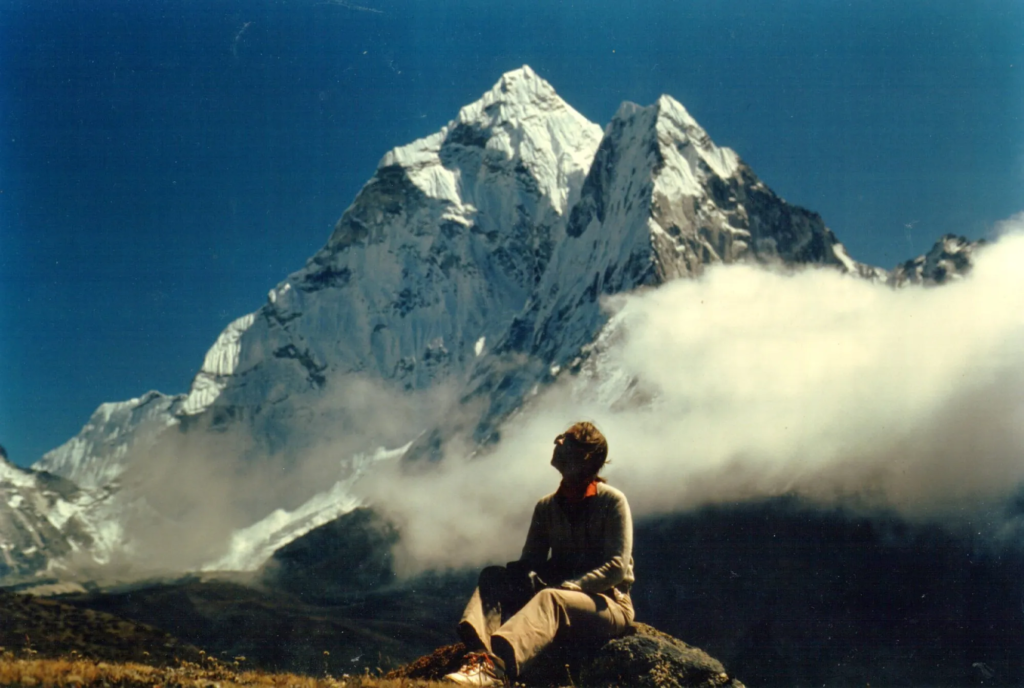
Yes! It’s real pashmina, and my boyfriend brought it back for me when he went to Nepal to climb Mt. Everest!
Beyond these externalities, there are moral issues. For one thing, a real pashmina is a comparatively scarce commodity; each pashmina goat produces only a small amount of the prized undercoat, which is harvested once a year, and the processing is labor-intensive. The goats are raised at high elevations, and must be monitored and protected from predators such as wolves and snow leopards. All of these factors make a real pashmina quite expensive for a piece of cloth that size. You should not be paying pashmina prices for acrylic or sheep wool or whatever you might actually be getting instead of what the salesperson or label says.
And there is the sentimental or ethical issue: in buying a genuine pashmina you are acquiring a piece of Nepal, a product of skilled hands, a souvenir that will be worth keeping, an accessory that you will wear with pride and pleasure in the memory of where and how it was acquired.
As opposed to a machine-made synthetic fabric that no one will mourn when it ends up in landfill.
In short, you want to know for sure what you are buying. You want to buy with confidence, and you especially want to give with confidence.
Disclaimer: I am the founder and owner of Sunrise Pashmina, an online store that has been in business since 1999. However, I will not say that our goods are the best or the cheapest on the market: in fact, there are quite a few pashmina producers in Kathmandu who are using the same raw materials and the same techniques as ours, and quite a few are selling their shawls online. We also have a policy of paying our producers whatever they ask, so our prices are not quite the lowest in the world.
What factors make it hard to know the answers to these questions?
Wall-to-wall faux
Faux pashmina is typically produced from acrylic, polyester, rayon, sheep wool, or mixed fibers. However, not all non-pashmina shawls should be regarded as fake, designed to fool the buyer and the public-at-large: some people prefer the weight, drape, durability, sheen, or price of non-pashmina fabrics.
Like costume jewelry, faux pashmina can be a “fun look” in itself, rather than a sad imitation. Or it can simply be the affordable choice, period.
Very few Nepalis are able to afford a real pashmina, yet virtually all wear shawls, at least occasionally. After all, jackets and sweaters arrived in Nepal relatively recently.
Buyer beware!
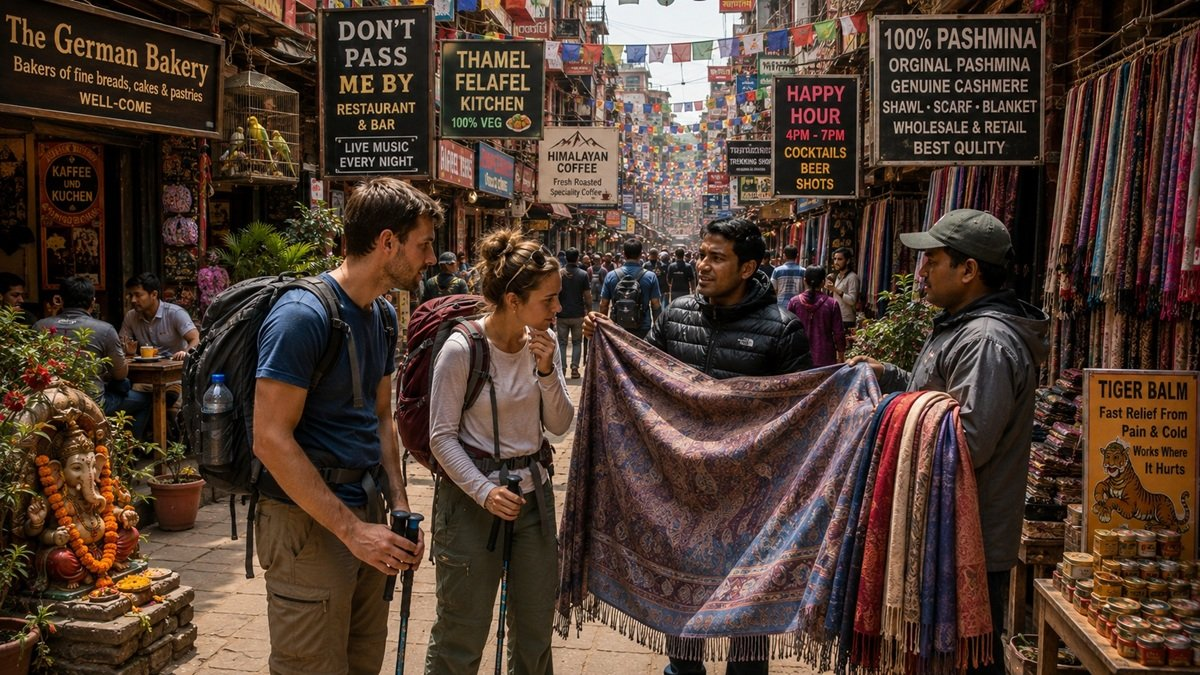
Even if the merchant is completely honest, buying pashmina in Nepal can be surprisingly confusing. Here are some of the reasons:
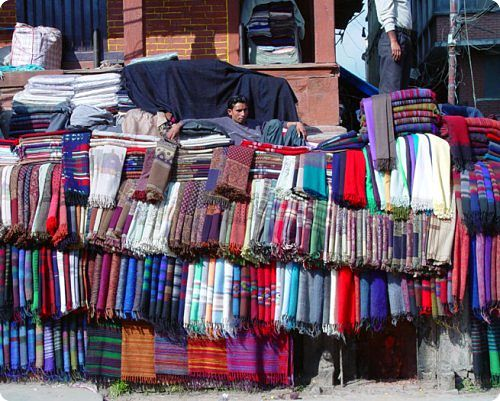
Prices are generally not fixed and posted. Haggling is the norm, and it is not regarded as unethical to take advantage of a buyer’s ignorance (and wealth).
Labeling is not policed in Nepal. Wherever you go, you will see knock-offs of high-end foreign goods such as Rolex and The North Face. A label that says “100% pashmina” can be stitched to any schmata without risk of prosecution.
The word pashmina is ambiguous. It can be used for any shawl that sort of resembles a pashmina, regardless of composition. That is simply a linguistic fact. The seller may tell you in all good conscience that an acrylic shawl is a pashmina – and the confusion is even greater due to Nepali’s lack of articles: there is no distinction between “this is a pashmina” and “this is pashmina.” That’s not the seller’s fault: how much Nepali do you know?
There are numerous weaves. In addition to the basic square weave, there are diamond weaves, twill, herringbone, jacquard, some loose gauzy stuff that has no name as far as I no. There are single plies, double plies, and more. There are silk blends: 70% pashmina/30% silk is common in Nepal, but you can also find 80/20. All of these options are considered real and authentic.
A variety of finishes may make it difficult to distinguish pashmina from other fabrics. Pashmina may be brushed to produce a fluffy appearance and softer feel; the result is quite similar to many acrylic pieces. The fabric may be felted (repeatedly jabbed with needles) to produce a matted appearance that is hard to recognize as anything in particular. The shawl may or may not be treated with chemical softener, which makes comparison difficult.
Tasseled fringes are optional. A genuine pashmina shawl may or may not be trimmed with those hangy-down knotted doodads, and the length can vary from 1.5 to 6 inches. Ultrafine weaves of pashmina do not tassel well, and many people prefer the unfussy look of the natural “ragged” finish. On the other hand, faux pashminas almost always have tassels.
Standards are not enforced. Scientific testing of fiber provenance, diameter, and length is not generally available in Nepal. Testing may be recommended, but it is not mandatory. Virtually all fiber currently used in Nepal’s pashmina garments is processed in China, and the middlemen who bring it are not particularly informative. Most pashmina sellers in Nepal know virtually nothing about the exact provenance, husbandry conditions, or technical specifications of the yarn they purchase.
Adulteration! It has been reported that Chinese producers are treating merino sheep wool to yield something more similar to pashmina. Specifically, we have heard that acid baths can remove the scales typical of sheep fiber, so that even microscopic examination is inconclusive.
What are the conventional criteria on which buyers often base their conclusion about the composition of a shawl?
The burn test. A common belief is that you can test whether a shawl is made from pashmina by burning a fiber drawn from it. Note that you do not need to cut a chunk off the shawl… a tiny fiber is generally enough, and you can burn it by touching it to a match immediately after it is extinguished.
It is true that synthetic fibers ball up into molten globs that bead up, while pashmina will reduce to a brittle or soft ash. The trouble is that other animal fibers (notably sheep wool) are also made of protein and will burn the same way as goat down. You may hear that you can tell the difference because goat hair smells like goat, while sheep smells sheepy. If that distinction works for you, you probably don’t need the test.
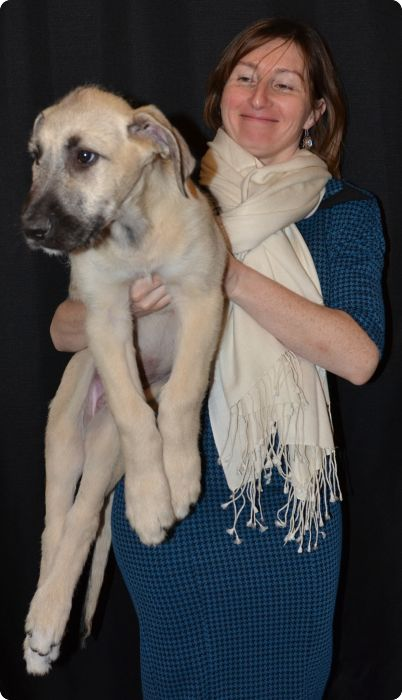
The ring shawl gambit. A common claim is that pashmina is so fine that a full shawl (95 cm x 203 cm; 36″ x 80″) can pass easily through a woman’s ring. That is a claim that requires numerous qualifications. A full-size Sagarmatha, the basic weave 100% pashmina shawl that we sell at Sunrise, will not pass through Empar’s wedding ring. She has small hands, but so do most Asian women, so we can say that the normal weave of pashmina will fail the ring test. Our superfine Pumori will easily pass through. The double weight twill 100% pashmina Tamserku won’t come close.
Furthermore, quite a few non-pashmina fabrics will pass the test – silks, organza, and so on. In any case, this test has no serious standing, and is only performed for credulous buyers who will be impressed by such theater.
Price “You get what you pay for.” Maybe. Maybe not. Of course, you might find a pashmina at an estate sale or a recycle store, and get a ridiculous bargain. But generally speaking, if the shawl cost $5, even $25, you can be pretty sure it’s not pashmina, even if you are buying it in Nepal. If you’re buying online and the price is less than $75, you can be pretty sure it’s not 100% pashmina.
On the other hand, you could pay a lot more than that and find you’ve purchased an inferior piece. If you’ve bought it on the street from a clever hawker, you’re probably stuck.
It also is untrue that you can be sure you are getting top quality if you pay top dollar. But that’s a question for another article. Let’s just say that if you pay $75 or more, you can be reasonably sure that you’re getting pashmina … of some quality or another.
Label As noted above, labels are not effectively regulated in Nepal. If the label says “Dryclean only,” that may be an indication that something is amiss. Pashmina can be handwashed (see https://www.sunrise-pashmina.com/howtowashpashmina.html), while drycleaning can be disastrous. Also, sewn-on tags may be difficult to remove without damaging the cloth, which is why we don’t use them at Sunrise Pashmina.
Where to buy your pashmina
Broadly, there are two options. You can buy online, which we don’t recommend, OR you can go to Nepal and shop and have a total blast in one of the most amazing countries in the world!
Buying online is intrinsically dicey. You not only can’t be sure of the product itself, but you have to worry about the purveyor. Are they trustworthy? Will they ship the thing? Will they replace it if it gets stolen en route – or looted from your porch ten minutes after it is dropped in plain sight? What recourse do you have if a seller based in Nepal simply keeps your money and doesn’t respond to further inquiries? Are the store reviews bogus? We’ll get to these issues in another article, but for now let’s concentrate on the correct answer:
You should go to Nepal and purchase directly from the pashmina producer.
That being said, we have to admit there are plenty of caveats. Nepal is a shopping paradise, for the most part, but there are downsides.
It’s a haggle economy, right? Can you handle that?
Yes. Buy from a store that specializes in pashmina. Say you will be living in Kathmandu for a while. Ask questions that suggest you are thinking of buying a lot of pieces – do you have a wholesale price list? Do you have your own shipper? Do not treat the merchants as your adversaries. Assume that they like you and want to have a mutually beneficial long-term relationship.
There is virtually no policing of fraud.
Some Nepali merchants may be cagey about prices, but they generally are honest and take pride in their work. If you ask the right questions, they are not going to deliberately lie to you.
If you ship a load of stuff from Nepal rather than pay those ridiculous overweight charges when you fly out, it may or may not arrive. And if it doesn’t…what’s your recourse?
Don’t take your own packages to the shipper. Have the merchant handle that for you. He’ll get a much better deal, and you know who to contact if there is a problem.
All-in-all, it is not hard to get a real pashmina for a reasonable price in Kathmandu, and if you do all your Christmas shopping you may go a long way toward amortizing the cost of the trip.
As we have said, there are different qualities of pashmina, and we’ll discuss those in our next article.
Leave a Reply